
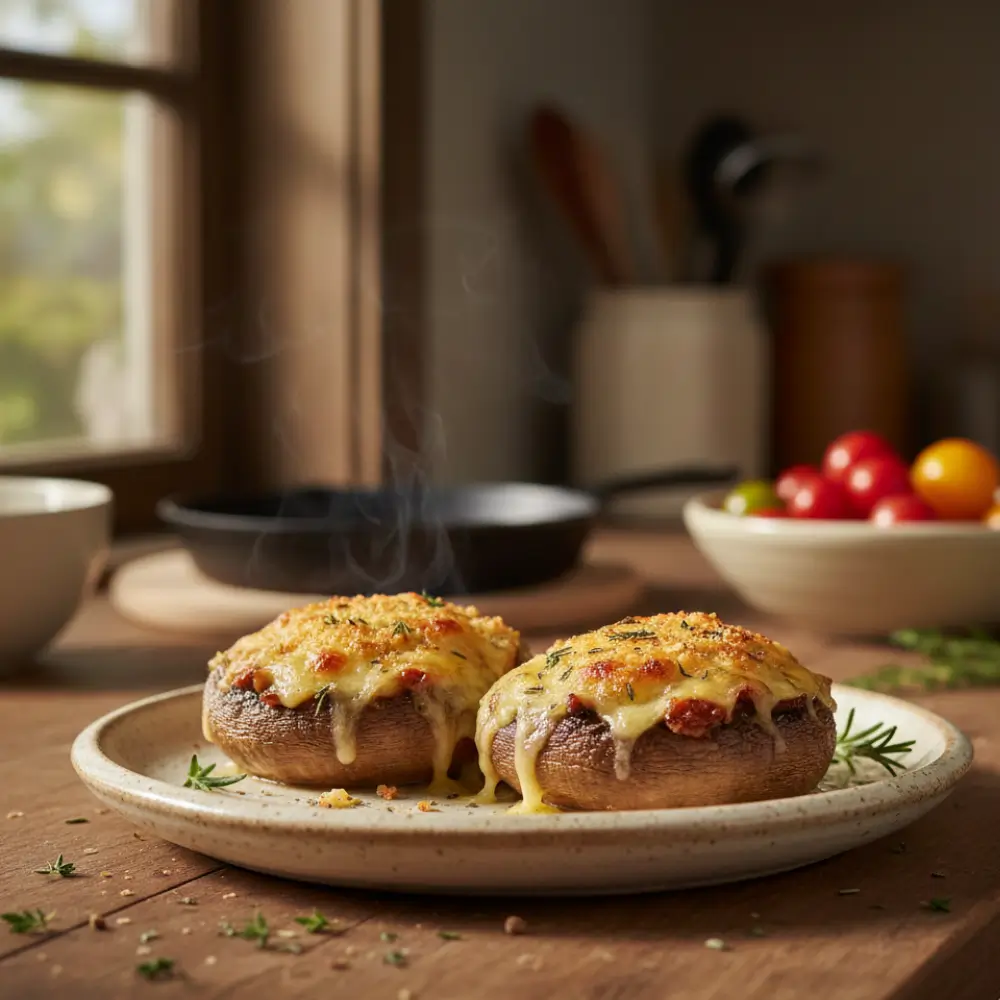
Stuffed Portobello Mushrooms have been one of those recipes I kept coming back to whenever I wanted something that felt hearty, cozy, and still plant-based. The first time I made them in my small California kitchen, I remember being surprised by how filling they were. One bite in, and I realized these weren’t just a side dish pretending to be dinner. They were the main event.
In this guide, I’m walking you through Stuffed Portobello Mushrooms step by step, explaining not just how to make them, but why each step matters. You’ll learn how to avoid soggy mushrooms, how to build deep flavor without dairy, and how to bake them so the texture stays just right. Whether you’re cooking for a weeknight dinner or planning something special, this recipe fits right in. If you’re thinking about a full plant-based menu, learn more about romantic meals like vegan valentines day dinner ideas.
PrintStuffed Portobello Mushrooms

These stuffed portobello mushrooms are oven-baked at 350 degrees with a savory vegan filling that holds together and never turns watery. A comforting plant-based main that feels filling and balanced.
- Prep Time: 15 minutes
- Cook Time: 30 minutes
- Total Time: 45 minutes
- Yield: 4 stuffed portobello mushrooms
- Category: Main Dish
- Method: Oven Baked
- Cuisine: Vegan / Plant-Based
- Diet: Vegan
Ingredients
For the mushrooms
4 large portobello mushroom caps
1 tablespoon olive oil
Salt and black pepper, to taste
For the filling
1 small onion, finely chopped
2 cloves garlic, minced
1 cup finely chopped vegetables (such as spinach or similar greens)
¾ cup cooked grains or mashed legumes
2 tablespoons plant-based creamy element (such as nut-based cream)
1 tablespoon fresh herbs, chopped
Salt and black pepper, to taste
Instructions
Preheat the oven to 350 degrees and line a baking tray.
Gently clean the portobello mushroom caps and remove the gills if desired.
Brush the caps lightly with olive oil, season with salt and pepper, and place them gill-side up on the tray.
Bake the mushroom caps for 10 minutes, then remove from the oven and set aside.
While the mushrooms pre-cook, sauté the chopped onion and garlic until soft.
Add the chopped vegetables and cook until excess moisture has released.
Remove from heat and mix with the cooked grains or legumes, creamy element, herbs, salt, and pepper.
Spoon the filling evenly into each mushroom cap, forming a gentle mound.
Return the stuffed mushrooms to the oven and bake for 25 to 30 minutes, until tender and set.
Let rest for a few minutes before serving.
Notes
Pre-cooking the mushroom caps helps prevent sogginess.
Avoid overfilling to ensure even baking.
Taste the filling before stuffing to adjust the seasoning.
Nutrition
- Serving Size: 4 stuffed mushroom caps
- Calories: 180
- Fat: 8g
- Carbohydrates: 20g
- Fiber: 4g
- Protein: 7g
Keywords: stuffed portobello mushrooms, baked stuffed portobello mushrooms, vegan stuffed mushrooms, portobello mushroom caps, oven baked mushrooms
Table of Contents
What Makes Stuffed Portobello Mushrooms So Popular
Why portobello mushrooms work as a meatless main
Stuffed Portobello Mushrooms work so well as a meatless main because portobellos already bring that deep, savory flavor people crave. They’re naturally rich and satisfying, which means they don’t need much help to feel complete. Thanks to their wide caps and firm bite, they hold fillings beautifully without falling apart.
I’ve served these to friends who swear they “need” meat at every meal, and every single time, the plates came back clean. The size alone makes them feel like a proper entrée, while the texture stays tender instead of mushy when cooked the right way.
Flavor science: umami, moisture, and oven roasting
When I make Stuffed Portobello Mushrooms, the flavor always starts with what the mushroom already brings to the table. Portobellos have a deep, savory taste that feels comforting and rich without needing anything fancy. That’s why they work so well as a main dish instead of just a topping or side.
As they bake, something interesting happens. The heat draws out moisture slowly, which allows the natural savory notes to become more noticeable instead of diluted. I’ve learned the hard way that rushing this step leads to bland results, but steady oven heat lets the mushrooms develop a fuller taste while the edges gently brown.
Moisture is where most stuffed mushroom recipes fall apart. Portobellos naturally release liquid as they cook, and if that liquid has nowhere to go, the filling turns soft and soggy. By preparing the mushrooms properly and choosing a stuffing that can handle gentle heat, you end up with a dish that feels roasted instead of steamed. The final result is tender, savory, and deeply satisfying, with none of that watery texture people often complain about.
Stuffed portobello mushrooms vs stuffed button mushrooms
Stuffed button mushrooms are fun for appetizers, but Stuffed Portobello Mushrooms tell a different story. Button mushrooms are small and snackable, while portobellos feel like a real meal once they’re filled and baked.
The wider caps give you space to build layers of flavor instead of packing everything tightly together. That extra room also helps the heat circulate better in the oven, so the mushrooms cook evenly from edge to center. From my own cooking experience, portobello mushroom caps are simply more reliable when you want a dish that looks generous and tastes like a proper entrée.
Portobello mushrooms are known for their size and texture, which makes them ideal for stuffing, as explained in this overview on Wikipedia: Portobello_mushroom
Choosing the Best Portobello Mushrooms for Stuffing
How to select large portobello mushroom caps at the store
When I shop for Stuffed Portobello Mushrooms, I slow down in the produce aisle. The mushrooms you choose decide how the final dish turns out. I always look for portobello mushroom caps that feel firm in my hand, not spongy or limp. A good cap should be wide enough to hold filling but still sturdy around the edges.
Color matters too. I go for caps with a deep brown tone and a smooth surface. If the mushrooms look shriveled or have dark, wet spots, they’re past their best days. Fresh portobellos smell clean and earthy, never sour. That small detail saves a lot of disappointment later in the kitchen.
Should you remove the gills or keep them?
This question comes up every single time I make Stuffed Portobello Mushrooms with friends. Yes, you can eat the gills, and they’re completely safe. That said, I usually remove them when I’m stuffing mushrooms.
Here’s why. The gills hold moisture and release a dark liquid as they cook. That liquid can stain lighter fillings and soften the texture. I gently scrape them out with a spoon, which creates more room for stuffing and keeps the final dish cleaner and more balanced. If I’m using a darker, heartier filling, I might leave them in, but most of the time, removing the gills gives better results.
Cleaning mushrooms the right way without ruining the texture
Mushrooms act like little sponges, so rinsing them under running water is a mistake I learned early on. For Stuffed Portobello Mushrooms, I clean each cap with a damp paper towel or a soft brush. This removes dirt without soaking the mushroom.
If a cap is especially dirty, a quick rinse is okay, but I dry it immediately and let it air out for a few minutes before stuffing. Dry mushrooms roast better, hold their shape, and stay firm in the oven. Taking this extra minute makes a noticeable difference in the final texture.
The Best Stuffing Ideas for Portobello Mushrooms
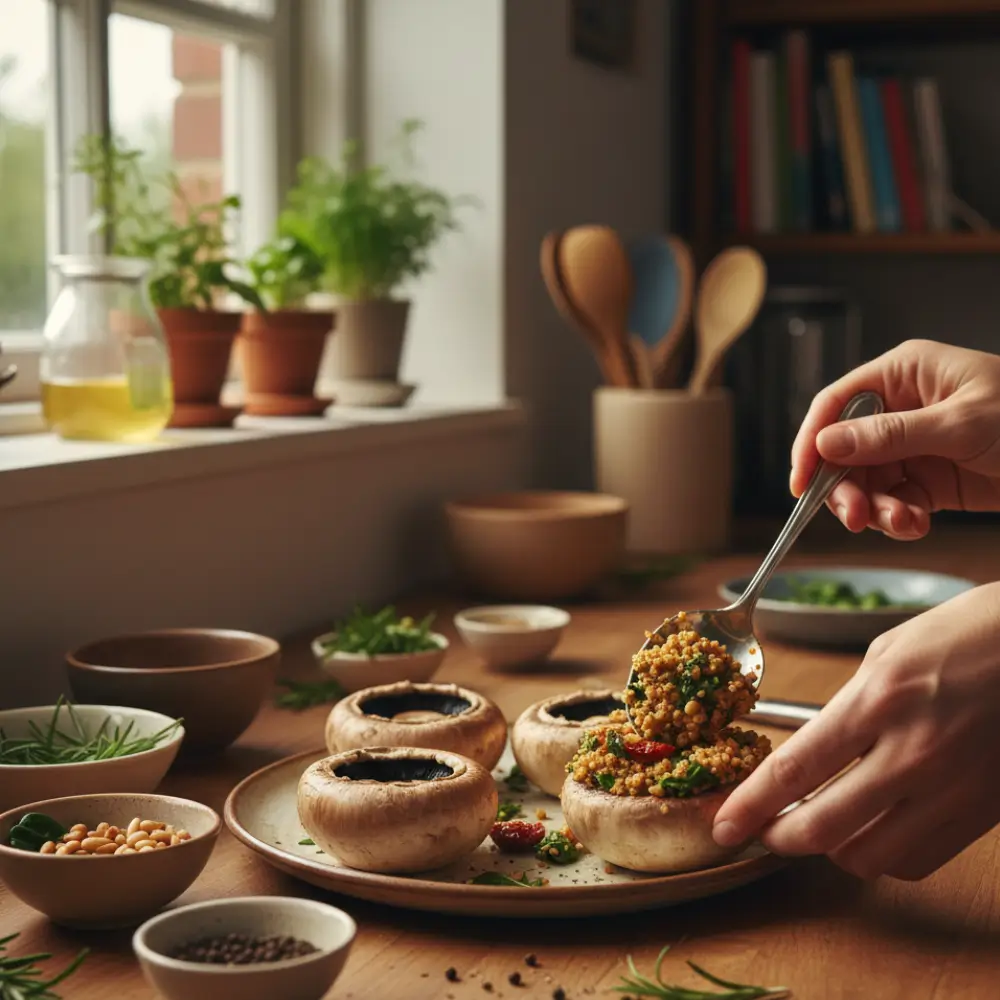
What is good to stuff portobello mushrooms with?
When it comes to Stuffed Portobello Mushrooms, the filling does most of the heavy lifting. Over the years, I’ve learned that the best stuffings are built around balance, not just flavor. You want something that tastes rich but also holds together once it hits the oven.
Instead of starting with loose ingredients, I always begin with something that gives the filling backbone. That might be a small amount of cooked grains, finely chopped vegetables that have already been softened, or legumes that have been lightly mashed. These choices help manage moisture during baking, which keeps the mushroom caps from turning wet and floppy.
Once that base is in place, I build flavor slowly. I mix in aromatics, fresh herbs, and a creamy element that brings everything together without making the filling heavy. This method creates a stuffing that stays cohesive in the oven and feels satisfying on the plate rather than scattered or dry.
Vegan stuffing combinations that hold together
Not every stuffing works well inside a mushroom cap. Soft ingredients on their own often collapse or leak liquid as they bake. Through trial and error, I’ve found that combining textures is the secret.
A mixture of sautéed vegetables and a firm base works best. For example, chopped spinach mixed with grains or blended beans stays compact while baking. I often borrow ideas from dishes like risotto-style fillings, which explains why I sometimes draw inspiration from meals like creamy vegan mushroom risotto when building my stuffing.
Adding a binder, such as a small amount of nut-based cream or mashed vegetables, helps everything stay in place without making the filling heavy. The result is a stuffed mushroom that slices cleanly and looks just as good on the plate as it tastes.
Texture balance: creamy, crunchy, and savory fillings
Texture is where many Stuffed Portobello Mushrooms either shine or fall flat. A filling that’s too soft feels dull, while one that’s too dry lacks comfort. I aim for a mix of creamy and slightly crisp elements.
Creaminess gives the filling richness, while a lightly baked top adds contrast. That contrast keeps every bite interesting. I’ve noticed that when the stuffing has just a bit of bite left after baking, people slow down and actually enjoy the meal instead of rushing through it.
The mushroom itself becomes part of the texture story. As the caps roast, they soften just enough to support the filling while still holding their shape. When everything works together, the dish feels thoughtful and complete rather than thrown together.
Should You Pre-Cook Mushrooms Before Stuffing?
When pre-baking portobello mushrooms matters
This is one of the biggest turning points in making great Stuffed Portobello Mushrooms. The first few times I skipped pre-cooking, I couldn’t figure out why the filling tasted fine, but the mushrooms felt watery underneath. Once I started pre-baking the caps, everything changed.
Pre-cooking matters most when the mushrooms are large or especially fresh. Bigger portobello caps naturally hold more moisture, and that moisture has to go somewhere. Giving the mushrooms a short bake before stuffing lets excess liquid release early, instead of soaking into the filling later.
I usually place the caps gill-side up on a baking sheet and let them warm through just until they soften slightly. They shouldn’t be fully cooked at this stage. The goal is simply to prepare the mushrooms so they behave better once they’re filled.
How pre-cooking prevents soggy stuffed mushrooms
Soggy Stuffed Portobello Mushrooms often result from trapped moisture. When raw mushrooms are placed directly into the oven with the filling, they release liquid as everything cooks together. That liquid has nowhere to escape, so it pools under the stuffing.
Pre-cooking solves this by giving the mushrooms a head start. They release much of their moisture on their own, which means the filling stays firm and flavorful later. I’ve found that even a short pre-bake makes the final texture noticeably better. The mushroom stays tender, the stuffing stays intact, and the flavors don’t get watered down.
This step also helps the mushrooms hold their shape. Instead of shrinking unevenly, they soften gradually, supporting the filling more evenly during the final bake.
Mistakes people make when skipping this step
One common mistake is assuming that all moisture will evaporate during the main bake. In reality, once the mushroom is stuffed, the filling acts like a lid, trapping steam underneath. That’s when textures go wrong.
Another mistake is overcompensating by baking the mushrooms too long at the start. That leads to rubbery caps and a dry final dish. Pre-cooking should be brief and controlled, not aggressive.
From my experience, skipping this step is the main reason people say they don’t like Stuffed Portobello Mushrooms. When done correctly, pre-cooking turns the recipe from unpredictable to reliable.
Step-by-Step Stuffed Portobello Mushrooms Recipe
Ingredient list with substitution options
This is the base version I make most often at home. I’ve tested small tweaks over time, but this combination gives reliable texture and flavor every time.
For the mushrooms
- Large portobello mushroom caps
- Olive oil
- Salt and black pepper
For the stuffing
- Finely chopped vegetables (such as onion and greens)
- Cooked grains or mashed legumes for structure
- Garlic or shallot for depth
- Fresh herbs
- A creamy element to bind everything together
If I’m cooking for guests, I keep the flavors familiar. When it’s just me at home, I sometimes lean bolder, inspired by dishes like vegan steak with peppercorn sauce, where richness comes from balance rather than heaviness.
How to prepare the stuffing mixture
I always prepare the filling before touching the mushrooms. That way, everything is ready once the caps come out of their brief pre-bake.
I start by gently cooking the chopped vegetables until they soften and lose excess moisture. This step matters because raw vegetables release water later, which can undo all your prep work. Once they’re ready, I let them cool slightly before mixing them with the grain or legume base.
At this point, I add herbs and seasoning, tasting as I go. The filling should taste fully seasoned on its own. Mushrooms don’t add saltiness, so the stuffing has to carry the flavor from the start. Finally, I fold in the creamy element just until the mixture holds together without feeling wet.
How to assemble stuffed portobello mushrooms evenly
Once the mushrooms have been pre-cooked and cooled enough to handle, I place them cap-side down on the baking tray. I spoon the filling in gently, pressing just enough so it stays put without packing it down tightly.
Overfilling is tempting, but restraint pays off here. A slightly domed top cooks more evenly than a towering pile. I smooth the surface so the heat reaches everything at the same rate.
This step always reminds me why I enjoy cooking. Something is calming about lining everything up neatly and knowing the hard part is already done.
Baking method for consistent results
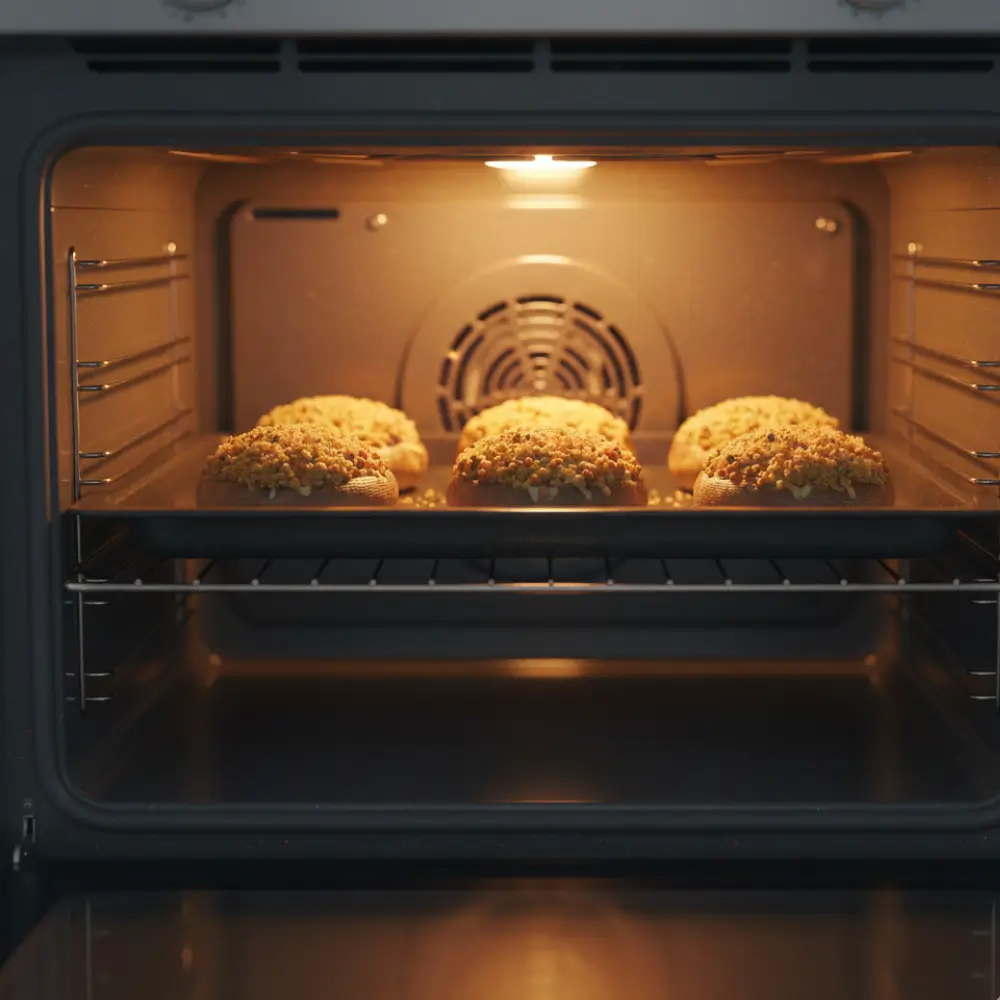
I return the stuffed mushrooms to the oven and bake them uncovered. Leaving them open allows steam to escape, which keeps the texture balanced. Halfway through, I rotate the tray so the mushrooms cook evenly.
They’re done when the caps are tender, and the tops feel set, not loose. The filling should look lightly baked, not dried out. Once they come out, I let them rest for a few minutes. That short pause helps everything settle and makes them easier to serve.
Every time I make Stuffed Portobello Mushrooms this way, I’m reminded why the method matters. Each step builds on the last, turning simple ingredients into a dish that feels intentional and comforting.
Oven Temperature and Cooking Time Explained
What temperature do you cook stuffed portobello mushrooms at?
After testing this recipe more times than I can count, I always come back to 350 degrees for Stuffed Portobello Mushrooms. This temperature gives the mushrooms enough heat to soften gradually without collapsing, while the filling warms through and sets properly.
Higher temperatures cook too fast on the outside and leave the inside uneven. Lower temperatures, on the other hand, dry things out before the mushrooms become tender. At 350 degrees, everything moves at the same pace, which makes the result predictable and calm instead of rushed.
This temperature also works well if you’re cooking multiple dishes at once, which I often do when I’m planning a full meal.
How long to cook stuffed mushroom caps in the oven at 350 degrees
Once the mushrooms are stuffed and back in the oven, they usually need 25 to 30 minutes at 350 degrees. The exact time depends on the size of the caps and how full they are.
I start checking around the 20-minute mark, especially if the mushrooms are on the smaller side. Larger caps benefit from the full cooking time. I’ve learned not to rely on the clock alone. Visual cues matter more than exact minutes.
Signs your stuffed portobello mushrooms are done
Perfectly cooked Stuffed Portobello Mushrooms look tender but not collapsed. The caps should give slightly when pressed, while still holding their shape. The filling should feel set and warm all the way through, not loose or wet.
I also look at the bottom of the baking tray. If there’s a large pool of liquid, the mushrooms likely need more time before stuffing. When done right, there may be some moisture, but it won’t overwhelm the dish.
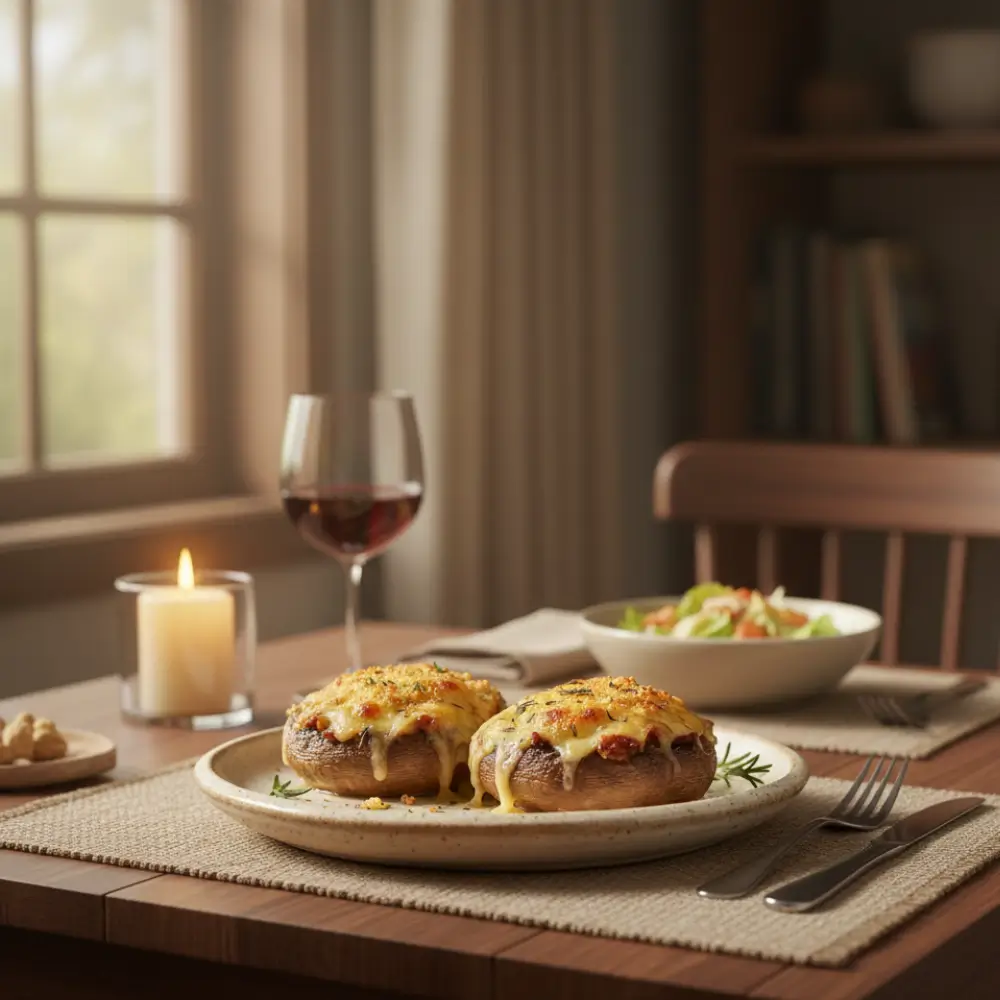
Once they’re finished, I let the mushrooms rest for a few minutes before serving. That short pause helps everything settle and makes the flavors feel more complete.
Common Mistakes When Making Stuffed Mushrooms
Why do stuffed portobello mushrooms turn watery
The most common complaint I hear about Stuffed Portobello Mushrooms is excess liquid pooling on the tray. In my experience, this almost always comes from moisture being trapped instead of released at the right time.
Mushrooms naturally give off liquid as they cook. If they go into the oven raw and filled, that liquid has nowhere to escape. The filling acts like a cover, keeping steam underneath. That’s why pre-cooking the caps and drying the filling ingredients first makes such a difference. When moisture is dealt with early, the final dish stays balanced instead of soggy.
Overfilling vs underfilling the mushroom caps
It’s tempting to pile on the stuffing, especially when the filling tastes good on its own. I’ve done it myself and regretted it. Overfilled mushrooms cook unevenly. The top stays soft while the base struggles to support the weight.
Underfilling causes a different issue. Too little stuffing dries out faster and doesn’t feel satisfying. The sweet spot is a gentle mound that sits comfortably inside the cap. That shape allows heat to reach the center while keeping the texture consistent from top to bottom.
Seasoning errors that lead to bland results
Mushrooms don’t bring saltiness on their own, so the filling has to carry the flavor. One mistake I see often is seasoning lightly out of caution. Once the mushrooms are baked, it’s too late to fix a bland interior.
I always taste the stuffing before assembling the mushrooms. It should taste complete before it ever touches the caps. Herbs should be noticeable, seasoning should feel balanced, and nothing should rely on the oven to “fix” it later. That habit alone improves the final dish more than any fancy ingredient.
Make-Ahead, Storage, and Reheating Tips
Can you prep stuffed portobello mushrooms ahead of time?
Yes, and this is something I do often when I want cooking day to feel relaxed instead of rushed. For Stuffed Portobello Mushrooms, the smartest approach is to prepare the components separately.
I usually clean and pre-cook the mushroom caps earlier in the day, then store them uncovered in the fridge so excess moisture can continue to escape. The stuffing can be mixed ahead as well and kept in a sealed container. When it’s time to cook, I simply assemble everything and bake. This method keeps the mushrooms from sitting in moisture too long and gives better results than assembling them far in advance.
Best way to store leftovers without drying them out
Leftover Stuffed Portobello Mushrooms store best when they’re allowed to cool completely first. I place them in a shallow container and cover them loosely. Airtight containers can trap steam, which affects texture, so I avoid sealing them too tightly.
In the fridge, they hold up well for a couple of days. The key is avoiding excess moisture buildup. If I notice liquid collecting at the bottom of the container, I drain it before reheating. That small step keeps the mushrooms from becoming limp.
Reheating stuffed mushrooms without losing texture
Reheating is where things often go wrong. Microwaves warm unevenly and soften the mushrooms too quickly, so I rarely use one unless I’m in a hurry.
For best results, I reheat Stuffed Portobello Mushrooms in the oven at a low temperature. This brings everything back to warmth gradually and helps the filling firm up again. I cover them loosely at first, then uncover for the last few minutes so steam can escape. The mushrooms won’t be exactly like fresh, but they’ll still taste comforting and well-balanced.
Stuffed Portobello Mushrooms FAQs
What is good to stuff portobello mushrooms with?
Portobello mushrooms work best with fillings that have both flavor and structure. From my own cooking, the most reliable options combine cooked vegetables with grains, legumes, or a creamy binder. This kind of stuffing absorbs moisture instead of releasing it, which keeps the mushrooms from turning watery. Soft fillings on their own tend to fall apart, while balanced mixtures stay compact and satisfying once baked.
Should you pre-cook mushrooms before stuffing?
Yes, especially for large portobello caps. Pre-cooking helps release excess moisture early, which prevents soggy results later. I didn’t always do this step, and the difference was noticeable once I started. A short pre-bake makes the mushrooms easier to work with and gives you more control over the final texture.
Is it okay to eat the gills of a portobello mushroom?
Portobello mushroom gills are completely safe to eat. That said, I usually remove them when making Stuffed Portobello Mushrooms. The gills hold moisture and release a dark liquid as they cook, which can affect both texture and appearance. Removing them also creates more space for the filling and leads to a cleaner final dish.
What temperature do you cook stuffed portobello mushrooms at?
A steady oven temperature of 350 degrees works best. This level of heat allows the mushrooms to soften gradually while the filling warms through and sets. Faster cooking temperatures often cause uneven results, while gentler heat keeps everything balanced.
How long to cook stuffed mushroom caps in the oven at 350 degrees?
Most Stuffed Portobello Mushrooms need about 25 to 30 minutes at 350 degrees. Larger caps may need the full time, while smaller ones finish sooner. I rely on how the mushrooms look and feel rather than minutes alone. When the caps are tender and the filling feels set, they’re ready.
What are common mistakes when making stuffed mushrooms?
The most common mistakes include skipping pre-cooking, using fillings that release too much liquid, overfilling the caps, and under-seasoning the stuffing. Each of these issues affects texture more than flavor. Once I learned to manage moisture and season the filling fully before baking, the recipe became far more reliable.
Final Thoughts
Stuffed Portobello Mushrooms are one of those recipes that reward a little patience. Once you understand how mushrooms behave in the oven, the dish becomes simple and dependable. Every step, from choosing the caps to letting them rest after baking, plays a role in the final result.
I’ve made this recipe for quiet weeknights and special dinners alike, and it always feels comforting without being heavy. If you’re planning a full plant-based meal, pairing these mushrooms with something festive like heart-shaped vegan pizza makes the table feel complete.
Ready to try these Stuffed Portobello Mushrooms?
Save this recipe, share it with someone who loves plant-based cooking, and give it a try this week.